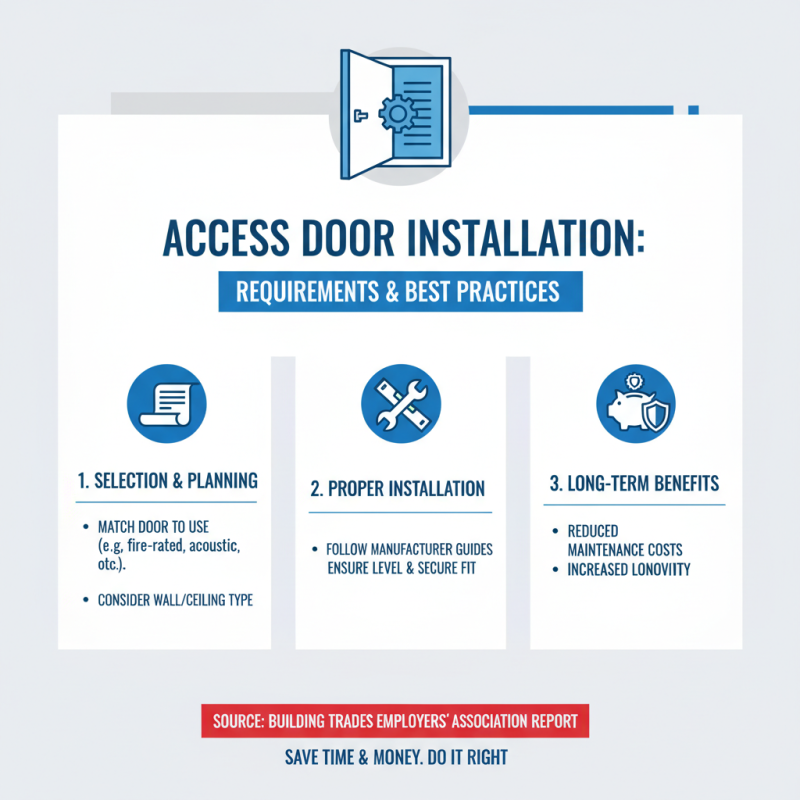
Best Access Doors for Your Building Needs Which One to Choose?
When it comes to building design, access doors play a crucial role. These doors provide essential access for maintenance and repairs, making them a key component in various facilities. Selecting the right access door can greatly influence the efficiency and safety of your building.
Choosing the best access doors involves careful consideration of materials, sizes, and specific needs. Different environments demand different types of access doors; therefore, understanding their unique features is vital. For instance, metal access doors are ideal for durability, while insulated models are great for energy efficiency.
It’s important to reflect on what your building truly requires. Not every access door will suit every need. Inadequate research can lead to costly mistakes down the line. Take the time to assess your situation. Your choice of access door can significantly impact long-term maintenance and operational effectiveness.
Types of Access Doors Available for Various Applications
Access doors come in various types, tailored for specific applications. Each type serves a unique function and is designed for different materials. For instance, drywall access doors are perfect for drywall constructions. They offer seamless integration and are easy to install. However, choosing the wrong size could lead to problems later.
Another option is the metal access door. These doors are ideal for utility rooms or areas requiring greater security. They provide durability and resistance to wear and tear. However, metal doors can be heavy and may not fit all scenarios. Consider the weight and the area’s design before making a choice.
Fire-rated access doors are crucial in buildings requiring safety compliance. They can withstand high temperatures and help contain fires. Yet, they can sometimes be more expensive. Balancing budget and safety is essential. Each type of access door has its advantages and limitations. It’s vital to evaluate your specific needs before making a decision.
Best Access Doors for Your Building Needs Which One to Choose?
| Type of Access Door |
Material |
Ideal Use |
Key Features |
| Flush Access Door |
Steel or Aluminum |
Walls/Ceilings |
Concealed edges, moisture-resistant |
| Drywall Access Door |
Steel |
Drywall applications |
Easy installation, paintable surface |
| Fire-Rated Access Door |
Steel |
Fire-rated areas |
Heat-resistant, compliant with safety codes |
| Access Door for HVAC |
Plastic or Metal |
HVAC systems |
Lightweight, thermal insulated |
| Ceiling Access Door |
Steel |
Ceiling installations |
Drop ceiling compatible, easy to open |
Factors to Consider When Choosing Access Doors for Your Building
When selecting access doors for your building, several factors directly influence your choices. First, consider the purpose of the door. Some may need to provide regular access for maintenance. Others might serve as fire escapes or secure entry points. The intended use will dictate the design and durability you require.
Material is another critical aspect. Options vary from steel to fiberglass. Each material has unique benefits and drawbacks. For example, steel doors offer strength and security, while fiberglass options resist corrosion and are lighter. Additionally, climate plays a role. In humid areas, rust-resistant doors may be essential. Think about how local conditions impact your choices.
Size and location are equally important. Ensure the door fits well within the designated space. Carefully measure the opening to avoid complications during installation. Placement should also consider accessibility and safety. It's easy to overlook these details in the planning phase. Reflect on how these choices affect the building's functionality and safety standards. Making informed decisions will ultimately enhance the value and usability of your building.
Comparing Material Options for Durability and Security
When choosing access doors, material options play a crucial role in ensuring durability and security.
Steel, for example, is renowned for its strength. According to industry reports, steel doors have a life expectancy of over 30 years, making them a reliable choice for high-traffic areas. In contrast, aluminum offers a lighter alternative with decent corrosion resistance. However, it may not withstand heavy impacts as effectively as steel.
Wooden access doors provide aesthetic appeal and good insulation. Yet, they can be subject to warping and require regular maintenance. The choice of material often comes down to the specific needs of your building. Each option has its advantages and drawbacks. Balancing cost with long-term benefits is essential.
Tips for Choosing Materials: Consider the location and usage of the access door. For exterior doors, prioritize weather resistance. Assess security features based on the potential risk of unauthorized access. Remember, choosing the right material can enhance the longevity of your investment and reduce maintenance costs over time.



 Automatic Doors, Inc.