Top Automatic Doors What Should Global Buyers Choose?

Choosing the right automatic doors requires more than comparing prices and polished product images. Global buyers must examine traffic levels, climate, building use, maintenance access, and supplier performance. A busy hospital entrance needs dependable opening cycles, quiet operation, and precise safety sensors. A retail store may prioritize energy control, appearance, and simple daily servicing.

Experienced buyers also check certifications, installation guidance, spare-part availability, and response times before signing a contract. These details often determine long-term value. Ask for tested performance data, warranty conditions, and references from comparable projects. Local installers can reveal practical issues, including uneven floors, strong winds, or unstable power supplies.

Every project has compromises. The cheapest door may create higher maintenance costs later. The most advanced system may be unnecessary for a low-traffic entrance. Buyers should compare lifecycle costs, not only purchase prices. Safety remains non-negotiable, especially where children, elderly visitors, or wheelchair users pass frequently. Reliable automatic doors should detect obstacles, close smoothly, and support controlled access without creating confusion.

Supplier claims deserve careful review. Request clear technical documents and realistic delivery schedules. Confirm whether software updates, replacement sensors, and emergency support are available in your market. Some specifications look impressive but offer little benefit in actual use. That is worth questioning.

This guide examines leading automatic doors through a practical global purchasing lens. It considers performance, durability, compliance, service quality, and total ownership cost. The goal is not to name one universal winner. Different buildings need different solutions. A well-chosen door should work quietly, safely, and consistently for years.
Top Automatic Doors What Should Global Buyers Choose?

Automatic Door Types and Their Core Operating Principles

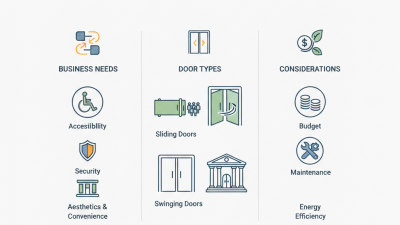
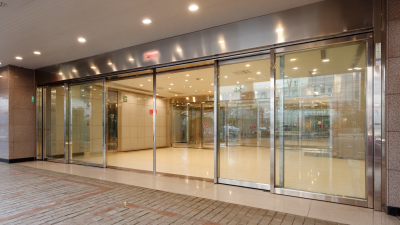
Automatic doors are not one technology. Their movement depends on the door leaf, drive unit, sensors, and control logic. Sliding doors use a motor and toothed belt to move panels along a track. Hinged swing doors use an electric operator to push or pull the leaf. Revolving doors rotate around a central shaft, reducing uncontrolled air exchange. Folding doors use linked panels where corridor width is limited. Each type solves a different traffic problem. That choice matters.

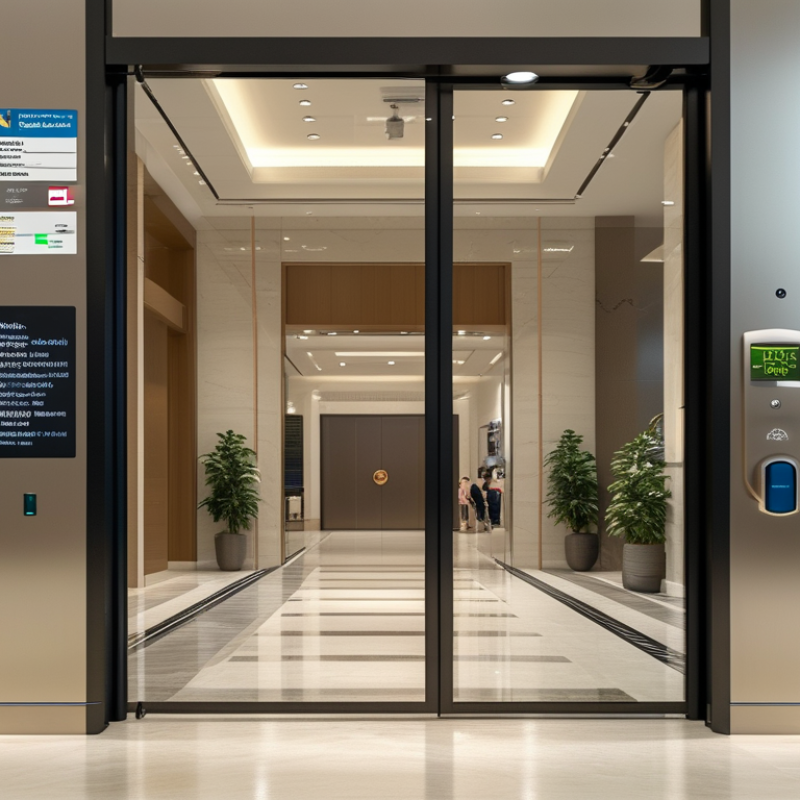
Microwave sensors detect movement approaching the entrance, while infrared sensors monitor presence near the threshold. Safety edges and light curtains can stop movement when a person or object enters the closing zone. A controller reads these signals and adjusts speed, hold-open time, and force. Low-energy settings are useful in clinics and care facilities. High-cycle entrances require stronger drives and careful thermal management. I have found that poor sensor positioning causes more complaints than slow motors. Small details matter.

Installation conditions can change the result. Wind pressure, uneven floors, heavy panels, and winter clothing all affect performance. A qualified technician should measure clear width, traffic flow, emergency requirements, and power quality before selection. Regular inspection should include tracks, hinges, sensors, batteries, and manual release functions. No sensor is infallible. A door may pass a factory test yet behave poorly after dust builds up. Buyers should question maintenance access and spare-part availability, not only opening speed. That part is often overlooked.
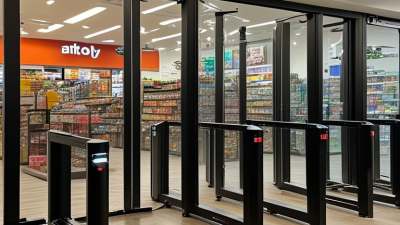

Key Features That Define High-Quality Automatic Doors

High-quality automatic doors begin with reliable movement, not flashy appearance. A smooth operator should open at a steady speed and stop without jolting. This matters in hospitals, hotels, offices, and busy retail entrances. Look for presence sensors that detect children, wheelchairs, carts, and slow-moving visitors. Safety edges and obstruction detection add another layer of protection. Small delays can create real risks.

Durability also depends on the door’s cycle rating, motor quality, and frame construction. In site evaluations, I have found that poor installation causes many early failures. Even a strong door may rattle when the floor is uneven or the sensors are badly positioned. Weather resistance is important for exterior entrances. Thermal performance can reduce drafts and energy loss. Clear access width also supports comfortable daily use. Buyers should request maintenance intervals, spare-part availability, and documented testing results. Marketing language is not enough.

Tips: Watch the door operate during heavy traffic. Listen for grinding or repeated reversals. Check whether sensors respond from different heights. Ask how the system performs during power interruptions. A low purchase price may seem attractive, but frequent service can cost more. Global buyers should confirm local safety requirements and use qualified installers. The best choice is not always the fastest door; it is the one that remains predictable after thousands of cycles.

How to Match Door Systems With Different Building Applications

Top Automatic Doors: What Should Global Buyers Choose?

Matching a door system to the building matters more than selecting the fastest model. Retail entrances need wide openings, reliable motion sensors, and strong cycle performance. Hospitals require touchless operation, smooth movement, and simple cleaning access. Warehouses need impact resistance, fast closing, and protection against uncontrolled airflow. Airports demand redundancy, clear evacuation routes, and accurate people detection. A neat glass entrance can still be the wrong choice.

The International Energy Agency’s 2024 Global Status Report for Buildings and Construction states that buildings consume about 30% of global final energy. Door selection affects heating and cooling losses, especially in busy entrances. Vestibules, adjustable closing speeds, and well-calibrated sensors can reduce unnecessary air exchange. However, energy savings depend on installation quality. Poor commissioning can cancel a good specification.

Accessibility also needs measurable attention. The World Health Organization reports that about 1.3 billion people experience significant disability worldwide. Low activation force, sufficient clear width, visual signals, and dependable backup power support safer access. In healthcare settings, installers should review infection-control procedures before choosing sliding or swinging systems.

In practice, buyers sometimes focus on purchase price and ignore maintenance intervals. That is a costly blind spot. Request cycle-life evidence, safety test records, spare-part availability, and local service capacity. One detail is often missed: the door must match the surrounding wall, floor, traffic pattern, and climate—not only the doorway.

Safety, Accessibility, Energy Efficiency, and Compliance Factors

Top Automatic Doors: What Should Global Buyers Choose?

Safety must lead the specification, not decorative glass or opening speed. EN 16005 requires powered pedestrian doors to manage impact, crushing, and presence risks. ANSI/BHMA A156.10 also addresses sensing, activation, and emergency operation. Buyers should request documented test results, maintenance procedures, and fail-safe behavior. A door that stops safely during a sensor fault matters more than a fast opening cycle. That detail is often missed.

Accessibility requires practical observation. The World Health Organization reports that 1.3 billion people, or 16% of the global population, experience significant disability. A wheelchair user needs enough clear width, gentle acceleration, visible moving panels, and reliable activation from several approach angles. Motion sensors can miss a slow-moving person. Push plates can be mounted too high. These are small design failures, but they affect daily independence. Local accessibility rules still control the final layout.

Energy performance deserves measurement. The International Energy Agency reported that buildings consumed about 30% of global final energy in 2022. Automatic doors can reduce unnecessary opening time, especially at conditioned entrances, but they are not automatically efficient. Poorly tuned sensors may trigger repeated cycles. A vestibule, accurate hold-open timing, and regular sealing checks can perform better. Buyers should compare measured air leakage and service records, not just claimed savings. The assumption that every automatic door saves energy is too neat. Availability of trained local technicians also affects compliance, safety, and long-term reliability.

Top Automatic Doors What Should Global Buyers Choose? - Safety, Accessibility, Energy Efficiency, and Compliance Factors
Automatic Door Type Typical Operating Configuration Safety Characteristics Accessibility Considerations Energy Efficiency Weather and Traffic Suitability Key Compliance Considerations Best-Fit Rating
Sliding Doors
  • Single-slide or bi-parting panels
  • Usually installed on a straight entrance line
  • Suitable for wider clear openings
  • Presence sensors can monitor the threshold and door path
  • Safety sensors should prevent impact and entrapment
  • Emergency breakout or manual override may be required
  • Provides generally smooth, hands-free passage
  • Opening width should be verified against local accessibility rules
  • Thresholds should be low and clearly visible
  • Good potential for reducing unnecessary open time
  • Can support vestibules and controlled access
  • Energy performance depends strongly on sealing and usage frequency
  • Well suited to airports, hospitals, offices, and retail entrances
  • Wind exposure may require appropriate control settings and sealing
Consider requirements such as EN 16005, ANSI/BHMA A156.10, local building codes, accessible clear width, emergency egress, and safety testing. ★★★★★
Swing Doors
  • Single- or double-leaf operation
  • Push, pull, or low-energy automatic activation
  • Can be installed on existing hinged-door openings
  • Requires reliable activation and presence detection
  • Opening and closing force must be controlled
  • Door swing area must remain free of obstructions
  • Useful where a level threshold and accessible controls are provided
  • Clear maneuvering space is required on both sides
  • Opening direction must not create a hazard on escape routes
  • Can be efficient when closing speed and hold-open time are optimized
  • Existing doors may be upgraded without replacing the complete entrance
  • Suitable for interior doors and moderate-traffic entrances
  • Less suitable where strong wind or very high traffic affects door movement
Verify accessible approach zones, door force limits, emergency egress, fire-door compatibility, and applicable low-energy operator requirements. ★★★★☆
Telescopic Sliding Doors
  • Two or more sliding panels moving in the same direction
  • Designed to create a wide opening within limited wall space
  • Available in single- or bi-parting layouts
  • Requires coordinated sensors for multiple moving panels
  • Anti-crush protection and emergency release are important
  • More moving components require disciplined maintenance
  • Can provide a large clear passage in a relatively narrow façade
  • Useful for wheelchairs, stretchers, carts, and high pedestrian flow
  • Good option for controlled openings where wall width is restricted
  • Performance depends on panel alignment, seals, and maintenance
  • Suitable for hospitals, transport facilities, and commercial buildings
  • May require stronger hardware in heavy-use environments
Check clear opening calculations, safety zones, breakout provisions, structural support, and regional automatic-door standards. ★★★★☆
Revolving Doors
  • Rotating wings within a circular enclosure
  • Usually available in three- or four-wing configurations
  • Designed for continuous pedestrian flow
  • Requires sensitive safety edges, presence sensors, and speed control
  • Emergency stop and breakaway features are important
  • Special attention is needed for children, luggage, and mobility devices
  • May not be suitable as the only accessible entrance
  • A separate swing or sliding entrance is commonly provided
  • Internal dimensions should accommodate the intended users and equipment
  • Very strong potential for reducing drafts and air exchange
  • Helps maintain indoor temperature at busy building entrances
  • Energy results depend on correct sizing and operating conditions
  • Well suited to high-traffic, climate-controlled buildings
  • Particularly useful where outdoor wind and temperature differences are significant
Confirm accessibility provisions, emergency evacuation strategy, safety sensors, fire and smoke requirements, and local entrance standards. ★★★★☆
High-Speed Roll-Up Doors
  • Flexible or rigid curtain that rolls vertically
  • Designed for rapid opening and closing
  • Commonly used between internal zones or industrial areas
  • Requires photoelectric sensors, safety edges, and automatic reversal
  • Emergency manual operation should be available
  • Safety systems must be tested regularly in high-cycle applications
  • Can support accessible movement when the clear width and threshold are suitable
  • Activation devices should be reachable and easy to operate
  • Not automatically appropriate for public pedestrian entrances
  • Rapid closing can reduce air exchange and temperature loss
  • Useful for separating conditioned and unconditioned spaces
  • Insulated curtains can improve thermal performance
  • Suitable for warehouses, logistics facilities, clean areas, and service corridors
  • Designed for frequent cycles and operational efficiency
Verify machinery safety, fire rating where applicable, guarding, emergency release, workplace safety rules, and building-code requirements. ★★★★☆
Low-Energy Automatic Operators
  • Motorized operator fitted to a hinged door
  • Can be activated by push plates, sensors, access control, or wireless devices
  • Often used for retrofit projects
  • Lower operating speed and force can reduce impact risk
  • Safety sensors remain necessary where the risk assessment requires them
  • Manual opening should remain possible when designed as a low-energy system
  • Strong option for accessible entrances and internal doors
  • Control locations, opening force, closing time, and maneuvering space must comply locally
  • Suitable for users with limited strength or mobility
  • Usually consumes less operating energy than continuously powered high-speed systems
  • Energy benefits depend on door sealing and the number of daily cycles
  • Suitable for offices, healthcare facilities, schools, and public buildings
  • Practical for upgrading existing doors without major structural changes
Check low-energy operator requirements, accessibility regulations, fire-door certification, egress rules, and compatibility with the existing door assembly. ★★★★★
Buyer note: The ratings are comparative guidance rather than certification. Actual performance depends on opening size, traffic volume, climate, wind pressure, insulation, sensors, installation quality, maintenance, emergency egress design, and local regulations. Global buyers should confirm applicable requirements such as EN 16005, ANSI/BHMA A156.10, ISO 21542, accessibility legislation, fire codes, electrical standards, and local building regulations before purchase.

How Global Buyers Should Compare Suppliers, Costs, and Support

For global buyers, comparing automatic door suppliers starts with evidence, not attractive brochures. Ask for project references in climates similar to yours. A coastal hotel, cold warehouse, and busy hospital create different demands. Request test records, safety certifications, installation drawings, and spare-parts lists. Suppliers with precise documents usually understand their equipment. Vague promises deserve caution.

Price should be measured across the door’s working life. Include shipping, customs handling, wiring, commissioning, training, and replacement sensors. A cheaper quotation may exclude the controller or overnight support. That gap appears later. Compare identical specifications, including opening cycles, panel thickness, motor rating, and emergency operation. Ask for a written warranty with response times. “Fast support” is not measurable.

Support matters when a door stops during a rainy morning or midnight delivery. Check whether technicians can guide fault diagnosis remotely and reach the site locally. Confirm language coverage, spare-parts availability, software access, and maintenance intervals. Ask how performance data is recorded after installation. I have seen buyers focus too heavily on purchase price and regret weak training. Still, careful comparisons can miss hidden site constraints. Leave room for a site survey and realistic contingency budget. A perfect forecast is unlikely.